|
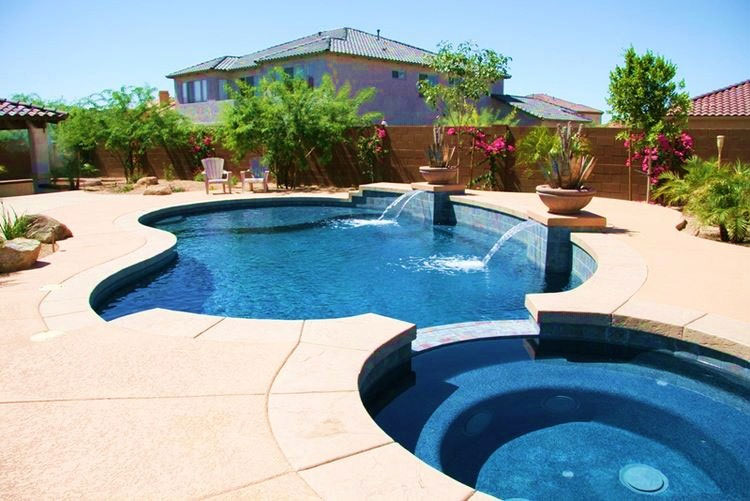
Gas Pool Heaters use either propane or natural gas. Operating independently of outdoor temperature conditions, gas pool heaters burn the fuel within a combustion chamber all while your pool water runs through copper coils to then return to the pool warm.
Pool heaters are made for residential and commercial purposes:
Benefits of Pool Heaters:
How they work?
Gas pool heaters use either natural gas or propane. As the pump circulates the pool's water, they water drawn from the pool passes through a filter and then to the heater. The gas burns in the heater's combustion chamber, generating heat that transfers to the water that's returned to the pool.
They're most efficient when heating pools for short periods of time, and they're ideal for quickly heating pools. Therefore, gas pool heaters can be a good choice for pools that aren't used on a regular basis, like residential pools. Gas pool heaters can maintain any desired temperature regardless of the weather or climate.
Estimating Gas Pool Heater Costs and Savings
The table below estimates the annual cost of using a gas pool heater for an outdoor swimming pool by location, by water temperature, and with or without using a pool cover.
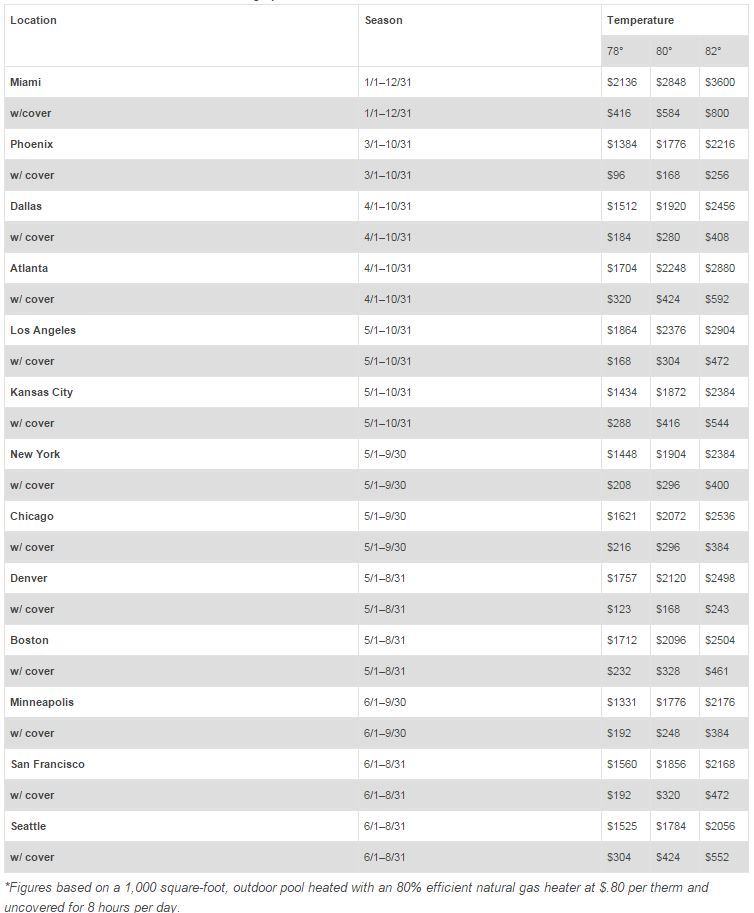
It's also important to learn cost-efficient ways to run a pool heater.
Installation and Maintenance
Proper installation and maintenance of your gas pool heater can optimize its efficiency. It's best to have a qualified pool professional install the heater and even perform complicated maintenance or repair tasks. With proper installation and maintenance, gas pool heaters typically last five or more years.
Environmental Impact
Compared to many other fuels, propane burns cleanly and efficiently. Propane produces more carbon dioxide when it burns than natural gas does, but propane produces fewer harmful pollutants and greenhouse gases than other petroleum-based fuels. In addition, propane itself is not considered to be a greenhouse gas in its unused state, but natural gas is; in the event of a leak, propane is assumed to have less of an environmental impact than natural gas.
Energy Density
When it comes to the amount of energy you can get from a given volume of fuel, propane has a clear advantage over natural gas. A cubic foot of propane can produce about 2,516 BTU of heat, while a cubic foot of natural gas produces only about 1,030 BTU, giving propane nearly two and a half time the energy density of natural gas. A propane pool heater will use a fraction of the fuel that a natural gas heater would use to heat the same volume of water.
Pool Heater Options:
Residential Water Heaters:
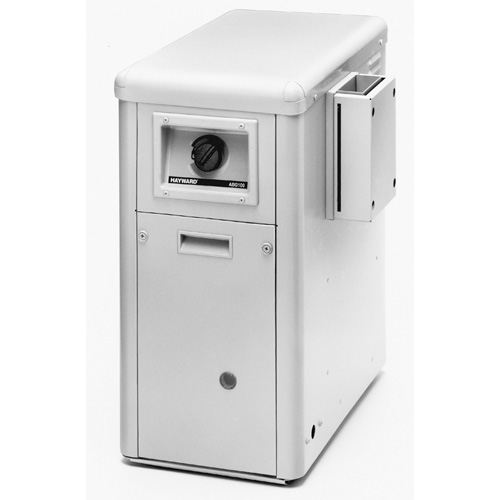
Gas fired pool heaters remain the most popular system for heating swimming pools. Today you can find new gas-fired heater models with much higher efficencies than older models.
Residential pool heaters come in different models depending on your needs:
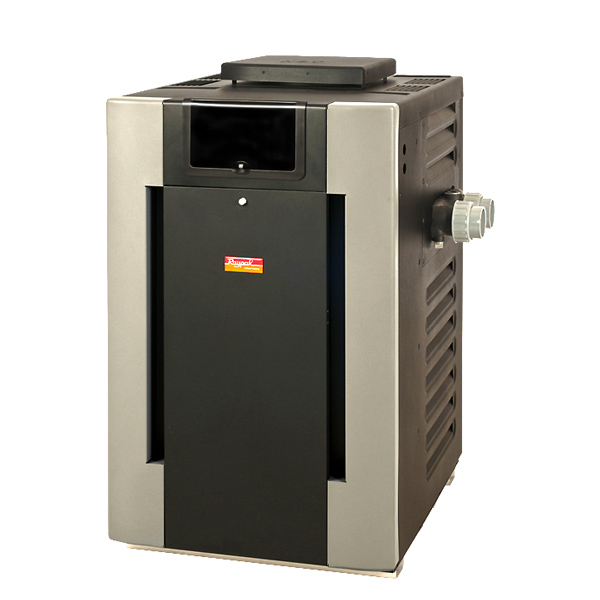
| Raypak Pool and Spa Heaters |
Hayward Pool Products: H-Series Electronic |
 |
|
Commercial Water Heaters:

Commercial Pool Heaters (Atmospheric): Rugged, efficient heaters for large pools:
- Perfect for clubs, universities, municipalities, watersport centers, large residential pools
- 23 model sizes - 511,500 to 4,000,000 BTUH inputs
- Indoor and outdoor styles
- 82% thermal efficiency
- Natural or propane gas
- Fuel-saving electronic ignition
- Precision water temperature control to +/- 1 degree
- Low operating cost
- Low maintenance cost
- Easy service
Only Raypak offers a pool heater that is not only the most efficient (up to 82% thermal efficiency) but also includes engineering and manufacturing innovations not found in other makes. As a result, Raypaks commercial pool heater is unmatched for heating efficiency, operating economy, low-cost installation and all-around dependability. And they are fired up and fully tested at the factory to assure their on-site performance.
We provide pool heater products from the following manufacturers:
| Residential / Commercial Garage Heaters |
|
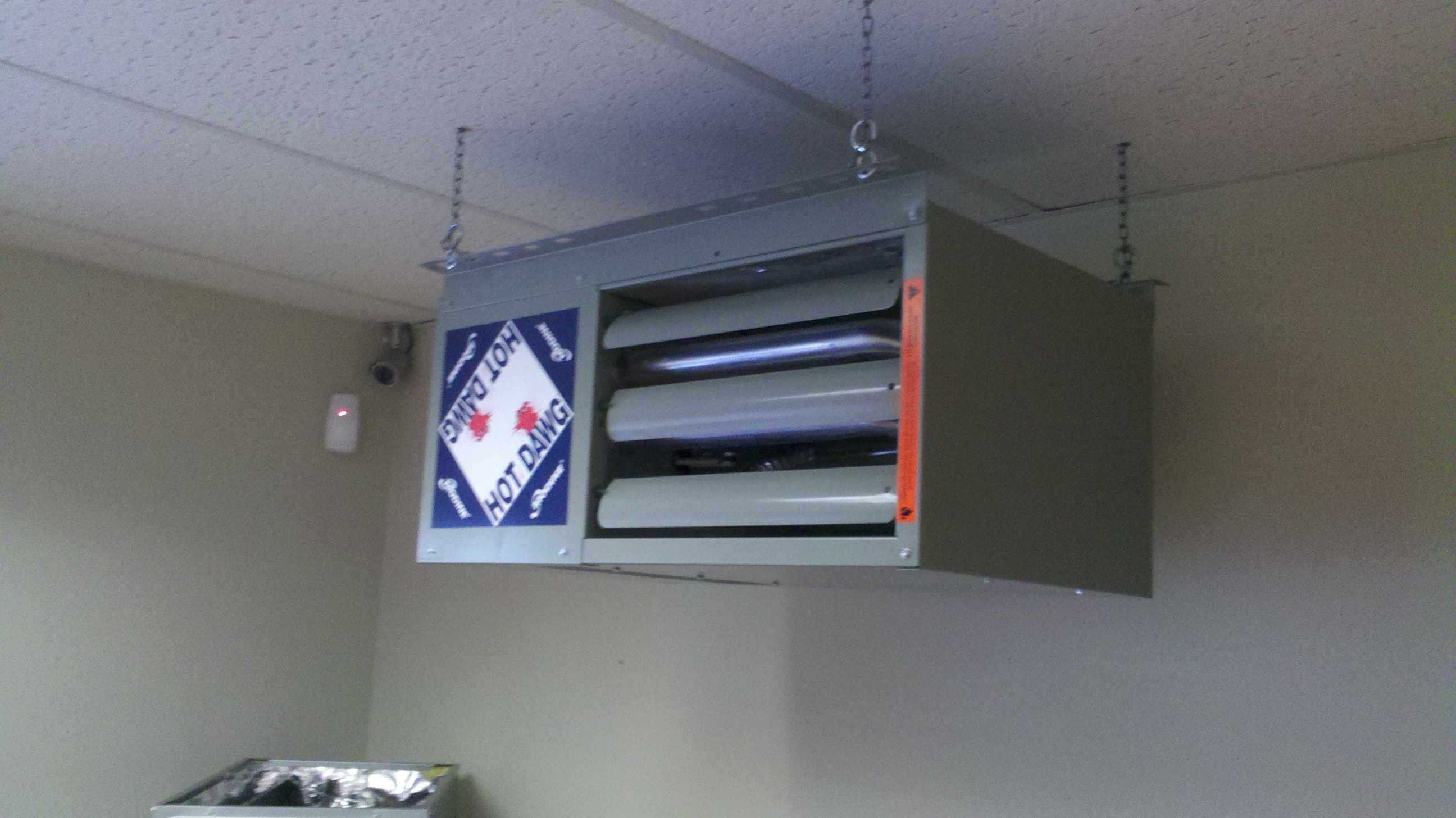
Whether the garage is a commercial work space, a residential space to enjoy your hobbies or just the "man cave," you'll want heat this winter. There are a few things to consider when selecting a garage heater to meet your needs.
Residential / Commercial Garage Heaters come in different types:
Garage Heaters:
Benefits of Garage Heaters:
Heat is created by releasing fuel from a propane tank, which is ignited by a pilot flame. The heat is stored in the heat exchanger until it reaches a set temperature and is finally released through a vent in the device. Propane tank garage heaters are great for a garage that is used as extra living space and does not contain combustible materials or hazardous liquids and gases.
Pros
Propane garage heaters are durable and efficient. These fast, self-contained heat sources will continue to run during power outages. They also warm quickly, allowing you to spend more time in your heated garage or shop.
Cons
If a propane garage heater is not vented properly, dangerous fumes can escape into your garage. You must make sure the garage has ventilation, which could bring in a constant cold draft. You will have to take precautions to make sure combustible gases are clear from the heater. A propane garage heater has an open flame and leaves an odor. Propane heaters also kick up dust, which can cause problems depending on the project you're working on.
Average Costs
The costs depends on current gas prices. You also have to consider the costs of installation and a gas fitter.
Garage Heaters are made for residential and commercial purposes:
Residential Garage Heaters:
First, think about what your garage is used for and what kind of insulation it currently has. Do you work on vehicles? Do you store paint, fuel or other combustible gases? Is your garage connected to your home? Do you have a ventilation system in your garage? The main types of garage heaters can be identified by their fuel source: electric, propane and natural gas.
Residential garage heaters come in different models depending on your needs:
All will burn LP gas or natural gas and are available in several sizes, so you can choose the one that best heats your space. Some may require an electrical hook-up and venting to the outside as well.
Residential Garage Heater Options:
Forced Air Garage Heaters:
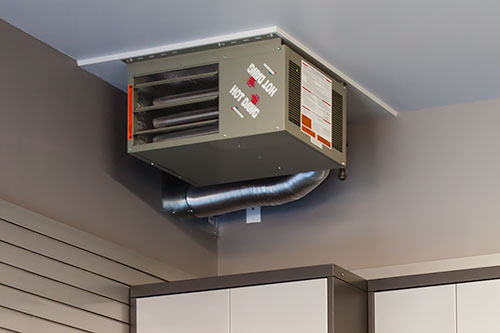
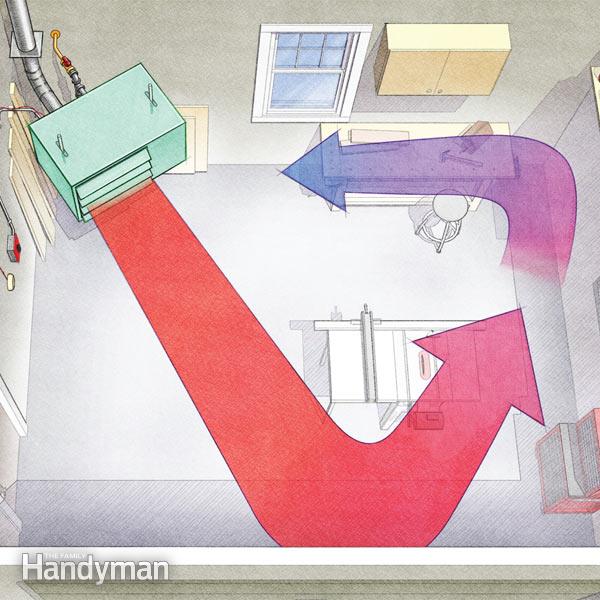
What is Forced Air Garage Heating? Traditional forced air garage heaters deliver instant heat like a conventional furnace and are designed to solve any outdoor heating needs. A convection garage heater moves air past a heating element warming the air; then the hot air rises away from the heater.
These garage heaters are best for enclosed spaces and are similar to a forced air heating system in a home. They are easy to use and install and are a great way to warm an entire garage.
Installation: Forced-air garage heaters can be placed in a corner, near a gal line and an electrical outlet. How many BTUs (units of energy) you'd need depends on variables such as your garage size, climate zone and preferred temperature settings. However, a basic rule of thumb for forced-air garage heaters is 45,000 BTU to heat a two to two and a half car garage, and 60,000 BTUs for a three-car garage.
Pros:
- Less expensive initial cost (50% less than comparable infrared heater)
Cons:
- Noisy
- Loses heat quickly if garage door is opened (longer recovery time)
- Heat rises and stratifies (the air is warmer at ceiling, cooler near floor), but you won't notice it with a 7- or 8-ft. ceiling
- Air movement tends to blow air-born dust around (woodworkers will have to shut down unit before staining and finishing projects)
"Low-Intensity" Infrared Tube Heaters:
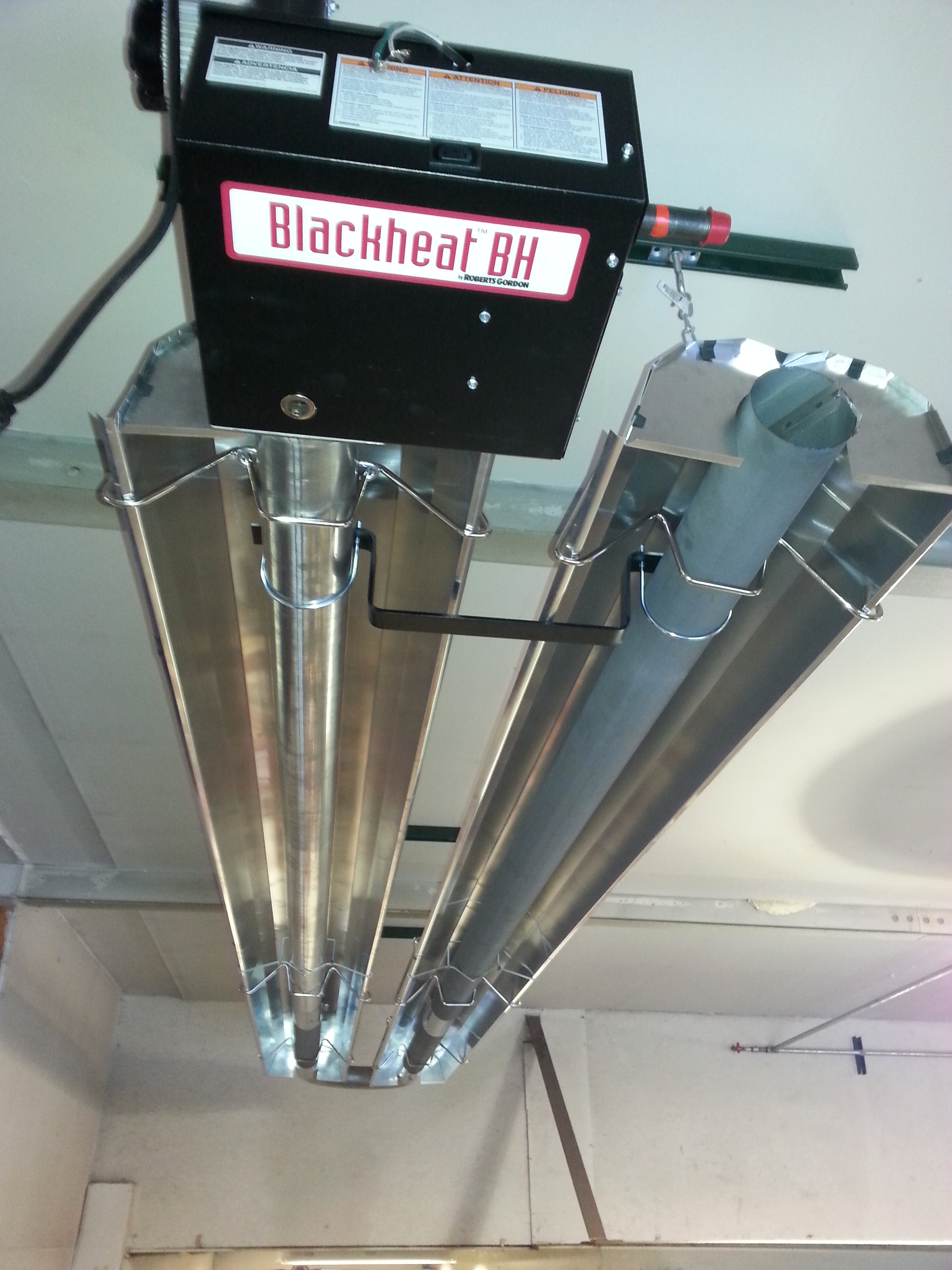
What is Infrared Garage Heating? An infrared heater is simply a hot surface heating appliance which, like the sun, emits radiant (infrared) wave energy to surfaces below. Upon striking surfaces or objects, the energy converts to heat to warm the surrounding air.
Available in many different styles from infrared to tube heaters. As opposed to convection heaters, radiant heaters work well when you're only looking to heat a specific area as opposed to an enclosed space.
If you plan on working on a project in your garage, particularly with wood or paints, an infrared heather may work better because it doesn't raise dust or keep dust airborne. A forced-air heater will stir up sawdust, which is certainly a problem with many DIY projects usually carried out in the garage, such as painting, re-upholstery, staining, sawing, etc.
However, you won't feel warm as quickly with an infrared heater because it heats objects first, rather than the air. Yet once your concrete floor warms, you'll feel more comfortable because the infrared heat provides uniform and consistent heating rather than dissipating the heat associated with blower fan heaters. With forced-air heat, the air is warmer at the ceiling and cooler at your feet. And a forced-air heater will take longer to reheat the space after the garage door has been opened and shut.
Installation: Installation is markedly different too. For safety reasons, it's advisable that all nearby objects be kept at distance of three to four feet. Infrared heaters must be installed a minimum of 7 ft. above the floor, and must hand down a minimum of 4 in. from the ceiling. It's critical that you make sure objects are not too close. Most infrared garage heaters are installed at the back of a garage pointed toward the garage door, then aimed downward at a 45-degree angle. They can also be installed between car bays if the garage door opener rail allows and you don't have tall vehicles such as a truck or SUV.
Pros:
- Little noise
- No air movement (dust settles)
- Lower cost to operate
- More uniform heat distribution (no stratification)
- Quicker heat recovery if door is opened/closed (floor and objects retain heat)
Cons:
- Higher initial cost (50% more than forced-air)
- Correct location of heater is critical (minimum 7 ft. from floor, 3 ft. from objects). Adequate headroom is also critical, because you can overheat if you're working near the unit.
Radiant Floor Heaters:
See the "Indoor Radiant Heating" section below
Industrial / Commercial Garage Heaters:
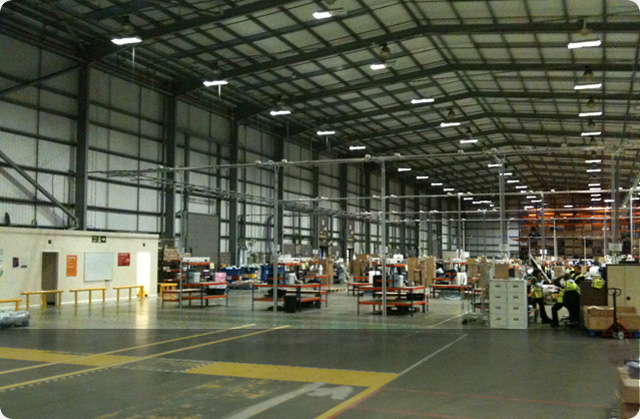
Industrial heaters provide safe, direct heat in drafty commercial environments such as workshops, warehouses, loading docks and construction sites. These heavy-duty heaters deliver up to 5,600 watts of quick, quiet heat and they are equipped for low-temperature operations down to 40 degrees Fahrenheit.
Industrial Grade Materials: Constructed with durable materials such as corrosion-resistant steel, epoxy powder paint, and industrial-grade plugs, these commercial heaters excel in rugged environments while maintaining personal safety with features like overheat protection and UL certifications.
Recommended for large spaces and heavy residential use, garage heaters offer portable convenience and keep your garage warm throughout the winter season.
Environmental Conditions to Consider:
- Insulated vs. Non-Insulated Space: An insulated garage or industrial space means the walls and ceiling are insulated, there are quality windows, and a garage door. Non-insulated spaces require more heat, so consider buying a slightly stronger unit if your space isn't insulated.
- One or Two-Car Garages: Are you heating a one or two-car garage? You'll need a larger heater to warm an entire garage or industrial space. But if you're only heating a specific part of your garage, like a work space, then consider a radiant heater that offers directed heat to your location.
- Ceiling Height: Garage and industrial space's ceilings are generally at least 8 feet. Higher ceilings mean more cubic area in your space and will require more BTUs of power to heat the space.
- Temperature Rise: If you live in a particularly cold part of the country, you'll need a more powerful heater to warm the same-sized space. Temperature rise is simply the difference between your desired indoor temperature and the outdoor temperature. Look for a heater with enough power to achieve the temperature rise you seek.
Industrial Heaters come in a variety of models depending on your needs:
Industrial / Commercial Garage Heater Options:
Radiant Heaters:
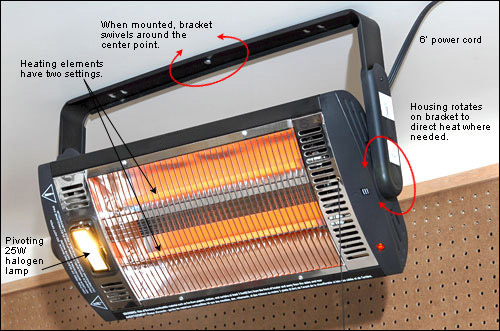
Radiant Heaters provide simple, spot heating to objects in the room. They work like the sun's rays - warmth is radiated from the unit to objects or people in its path. You have to be near the heater, so they don't warm entire garages like most electric heaters. They're also efficient and heat more quickly than other types of heaters. Like radiant heaters, they're ideal for people who want to heat specific areas like a work station.
Indoor Radiant Heating:
Most people who own radiant floor heating feel that the more important advantages are comfort and quite operation. Radiant floor systems allow even heating throughout the whole floor, not just in localized spots as with wood stoves, hot air systems and other types of radiators.
The room heats from the bottom up, warming the feet and body first. Radiant floor heating also eliminates the draft and dust problems associated with forced-air heating systems.
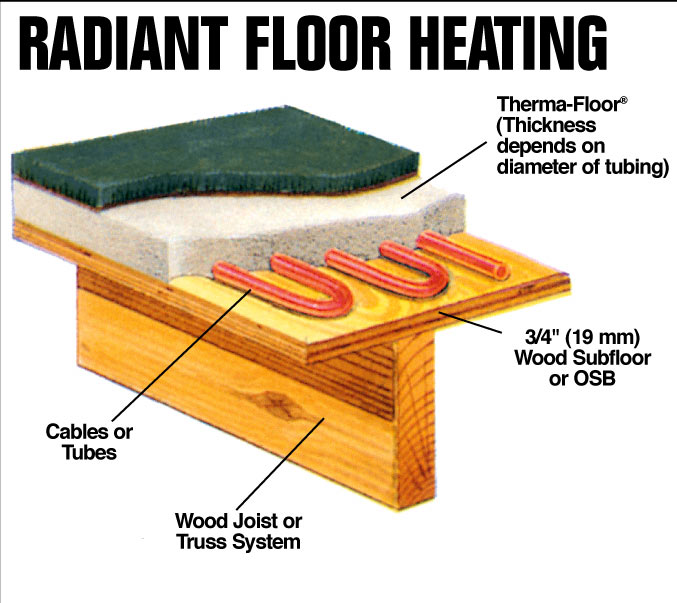

Even heat distribution may result in lower heating bills. With radiant floor heating, you may be able to set the thermostat several degrees lower, relative to the other types of central heating systems. This is because the entire surface of the floor radiates about the same amount of heat that the human body does, making the occupant feel warm even though the air temperature might be only 65 Farhenheit (18 celcius). It also radiates this heat for a long period of time. Radiant systems may result in less infiltration of outside air into the house compared to houses with forced-air heating. Radiant floor heating proponents claim that fuel savings of 15% to 20% over forced air systems are possible. However, recent reports suggest that this may not be the case, since occupants may not be comfortable with a "low" thermostat setting and thus not set it lower.
Radiant floor heating also allows for lower boiler temperatures, which may result in the boiler lasting longer (a 45 year life is not unusual). Radiant floors operate between 85-140 Ferhrenhiet (29-60 ceclius), compared to other hydronic heating systems' range of 130-160 Ferherinheit )54-71 celcius).

To some, the greatest advantage of radiant floor heating is aesthetic. The system is invisible. There are no heat registers or radiators to obstruct furniture arrangements and interior design plans. Radiant floor systems also eliminate the fan noise of forced hot air systems.
"High-Intensity" Infrared Heaters:
Similar to radiant heaters, infrared wavelength technology provides targeted warmth to your work area. Since they don't use a fan, they're known for their silent operation, but can't disperse warm air throughout your space like a fan-forced electric heater. Infrared and radiant heaters are great options for small areas or spaces where heat can be directed to one location.
| Infrared Space Heaters: |
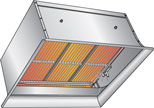 |
Infrared Space heaters are best applied in buildings with high ceilings and areas where there is a high demand for a heat load, such as loading docks or bay areas |
| Infrared Patio Heaters: |
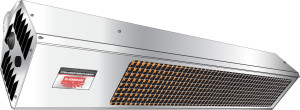 |
Patio Heaters are used to provide indoor and outdoor spot heating to applications such as restaurant patios, decks and vestibules |
| Portable Construction Infrared Heaters: |
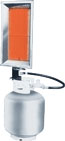 |
Portable heaters are generally mounted to a 20 lb., 10-inch base LP tank and are designed for outdoor or inside areas under construction. They are ideal when temporary heat is required or where a permanent energy source is not available |
Gas / Diesel / Kerosene Heaters:
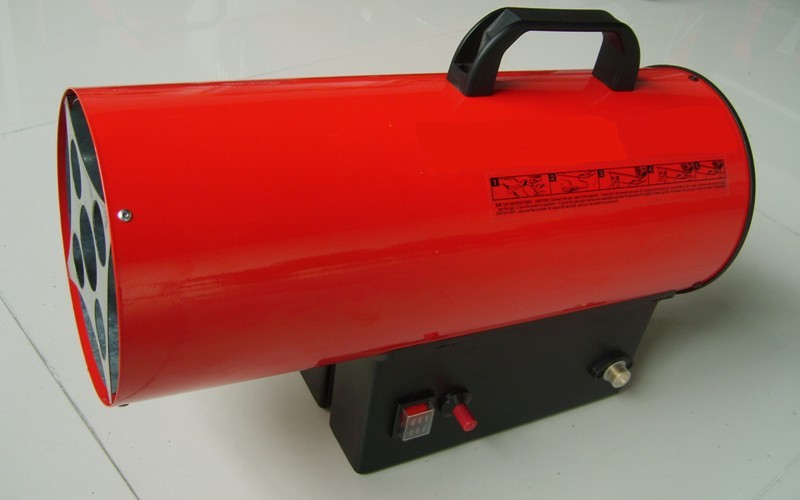
While not recommended in garages or enclosed areas, gas or diesel heaters are common for industrial applications. These powerful heaters tend to take a little longer to warm up, but can heat your space just as efficiently and effectively as other heater types. Gas heaters are popular for various industrial applications like water damage restoration, new construction drying and warming large unheated job sites.
We provide garage & industrial heater products from the following manufacturers:
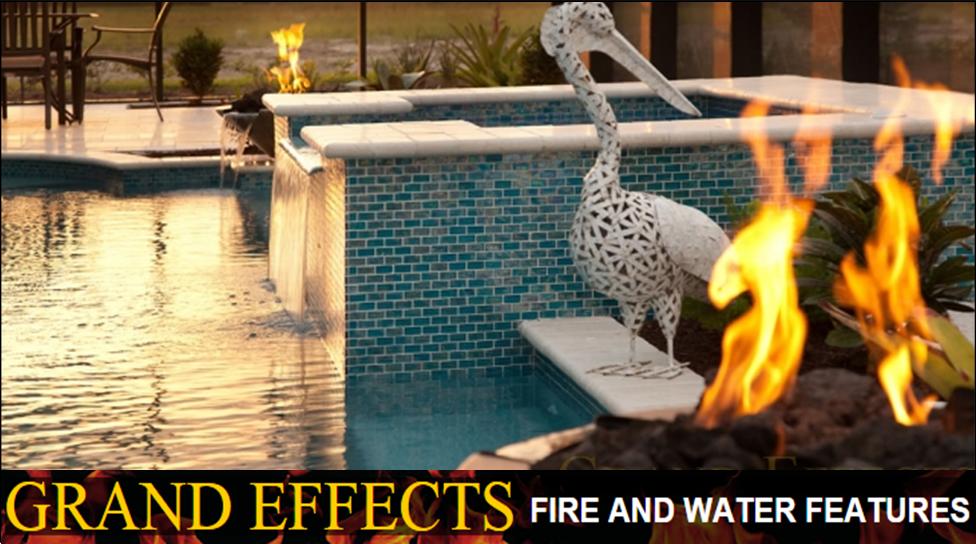
Combined Energy Services also offers a variety of other gas appliances to enhance the exterior of our home or business! Create ambiance by adding a fire pit or fire and water elements. Extend your outdoor summer season by installing propane patio heaters. Create ease and safety with snow melt systems on driveways and walkways.
Outdoor Radiant Heating:
Install a snow melting system and enjoy the benefits of: during winter save on maintenance costs, avoid shoveling, eliminate rock salt usage which can destroy concrete and interiors of buildings; reduce injury and risk of slip and falls.
CES can install radiant snow-melt systems inside walkways, staircases, patios, entrance-ways and driveways. Turn on & off as needed and pays for itself against maintenance costs very quickly.

Outdoor Fire Pits:
Camp fires are a great addition to your home on a spring or summer evening... There is nothing better than sitting around the fire, enjoying a warm evening, socializing with family and friends.
Everyone loves a fire but not everyone loves dealing with the effects of wood. From gathering wood, dealing with smoke constantly blowing in your face and cleaning ashes can be a pain to deal with! With a propane outdoor fire pit / camp fire, dealing with these inconveniences are a thing of the past.
Another benefit that wood doesn't provide, your propane fire pit can even be placed on your patio or deck.
CES has been installing fire pits for the almost 30 years. We have expert industry knowledge on the type of fire pit or camp fire that will best suit your home.
.jpg)
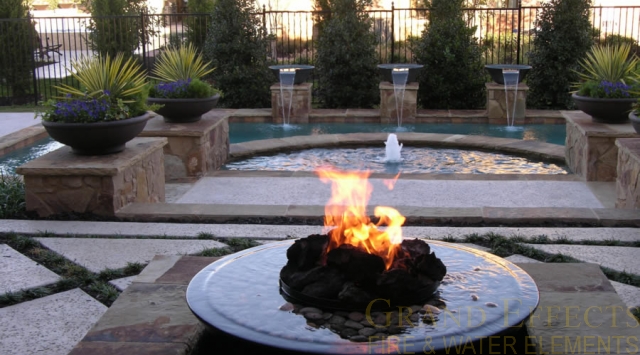
Grand Effects Fire & Water Elements:
We provide outdoor appliances from the following manufacturers:
Contact CES to order your heating appliances today!
|


.jpg)